 Kazanlak

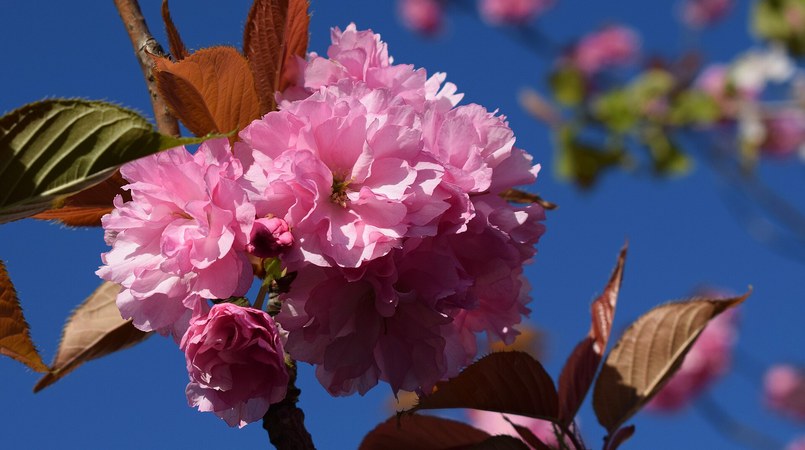
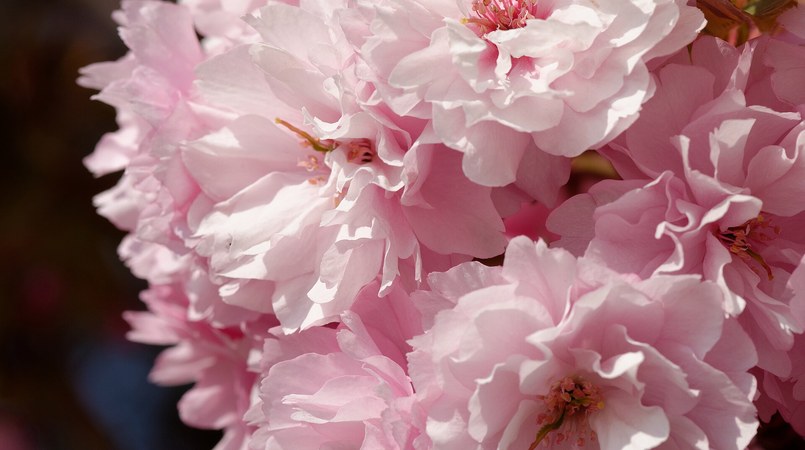
Japanese Cherry Blossom – Pink
Ripening time: ornamental tree – does not bear fruit
Origin: The pink Japanese cherry is an ornamental form of the Japanese flowering cherry (Prunus serrulata) of the Sato-zakura group – the garden cherries developed in Japan as early as the Edo period on the basis of the Oshima cherry (Prunus speciosa).
Tree: A medium-sized deciduous tree with a characteristic inverted-cone, vase-shaped crown of ascending branches, which broadens with age. The young leaves emerge together with the flowers and are bronze-coppery, turning dark green in summer and yellow to orange-red in autumn. The wood is relatively brittle, and the bark is thin and easily damaged.
Flowering: The flower buds are red and the flowers large, about 5 cm in diameter, deep pink, fully double, with many petals, gathered in clusters. It flowers profusely in April – early May, relatively late compared with other ornamental cherries.
Resistance: Cold-hardy – suitable also for regions with cold winters. Prefers a sunny position and a deep, well-drained, moderately moist soil; does not tolerate standing water. Branches may break under strong wind and heavy snow. Like all ornamental cherries it can be attacked by aphids, fungal leaf spots, branch canker and gummosis.
Use: A striking specimen tree for gardens, parks and avenues; thanks to its moderate size it is also suitable for smaller gardens. Propagated by grafting.
Fruit: The double pink Japanese cherry sets practically no fruit. It is grown solely for its profuse spring blossom and ornamental foliage.